10 Keys to Keyword List Development - Search Engine Optimization

There are certain SEO struggles most all businesses go through today, with varying degrees of success. Keyword Optimization has become an es...

Tuesday, January 3, 2017

Marketing Analytics Overview for 2017

Marketing Analytics and KPI Reporting in 2017:

In this post, we are setting enterprise level big data services aside to focus on small to medium size businesses, or SME analytics and data analysis.

With the advancements in marketing data analysis, we have huge opportunities to fine tune our marketing program. We are very fortunate to have access to very powerful analytical tools for little or no cost. It is just a matter of knowing which tools to use and how to use them.


First and foremost, it is now possible to measure which marketing effort is producing results, and which is not. This clearly is the closing of the loop we were all waiting for, with respect to quantifying business results and attributing sales to specific marketing activities. We can now accurately calculate return on a marketing spend, adjusting our marketing efforts to create the most sales per marketing dollar spent.

This also enables us to definitively prove the value of marketing. Finally, our success as marketers is not up to speculation. Clearly proving ROI can lead to more resources allocated to your marketing efforts, and an even more productive marketing program as a result.

In the industry of small business data analysis, there is Google Analytics, and everyone else. However, there are some hidden gems in the world of data mining, and there are analytics functions to many services and applications you probably already use.

Below, we will cover the main tools of analytics for small business, but there are many common services like short URL, infographics and QR code generators with analytics capabilities, so keep an eye out for new tracking opportunities on the horizon.

A precaution about this process: Although this is a gold mine of useful data, one can harvest a lot of data that should be ignored entirely, to be frank. The art of this science is knowing what data is important, how to render a clean set, and how to present it in relation to KPI goals for the company.

When forming an Analytics plan, one should determine what data you need to collect, and what specific analysis and processing that will yield this data as cleanly as possible. The data is only as clean as you insist, and clean data is essential to meaningful conclusions. This is an important step.

You also need to determine who will actually consume this information in the end, and what they are looking to see.  It is very common for a tech to overwhelm a C level with a bunch of confusing data.

All presentations and report should be developed with the end consumer in mind, focused on company KPIs, not confused with distracting marketing benchmarks that are only important to us geeks.

Ok, now to the meat and potatoes..

Of most importance, Website performance:


Google Analytics (GA), can deliver a lot of information that can help you improve the performance of your website - bounce rate, load times, mobile performance - and that certainly should not be overlooked in importance. GA can also provide a lot of information about demographics, information about the device used, paths a visitor takes to conversion, page depth, read times, interaction and engagement, landing page performance, and a host of other useful sets of data.

Analytics tools like MozPro, or SEMrush do a great job in evaluating site performance: identifying broken links, duplicate content, SEO opportunities, backlink analysis, keyword SERP performance analysis, social performance, competitive analysis and keyword research tools. They probably call Mom automatically on her birthday, but I have to check on that..

Competitive analysis: Spyfu, Majestic, Moz, SEMrush, all have highly useful and surprisingly insightful data analysis of your competition. You can what specific terms your competition desires. This can be so granular it is a bit frightening.. what do they also know about us??!

Content analysis: Youtube, Vimeo, Pinterest, Instagram, Snapchat.. all with analytics tools that are very useful in understanding what content drives sales, and what does not. They also measure many aspects of social interaction that may not be as important for conversion attribution, but useful in growing your social network and optimizing your content.


Email analysis: MailChimp and Constant Contact have analytics tools provide several useful data points, including how many people open your email, how many of them click through your links, bounce without reading, unsubscribe, report as spam and several other measurable interactions. They also provide comparable industry data for performance benchmarking. (Tip: Google has a Trackable Link Generator that is very useful for tracking traffic from a specific marketing campaign: https://ga-dev-tools.appspot.com/campaign-url-builder/)

Marketing Program analysis: GA is most useful in gathering information about the visitor, their behavior on your site, and which specific actions visitors take in becoming a customer. This is very valuable in fine tuning the content that drives this traffic; determining where, when and how it should be delivered to drive the most sales.  SEMRush, Moz and several other services provide similar functions and a variety of other services for a monthly fee.

Honorable mention: Kissmetrics, CrazyEgg and Yahoo Web Analytics.. there are numerous others, some paid, some free.. many fine services with some great features like heatmaps to fine tune your website UX (user experience) and cross-referenced attribution so you can track customers across the buying process. But much is redundant if you are using the other services mentioned here.

Popular CRM's like Salesforce, Insightly and Zoho all have analytics tools that can measure the leads generated by and sales attributed to specific marketing campaigns. This can bridge the gap between your content analytics and GA, and can make your grumpy CFO dance the cha-cha.

There are presentation and proposal services (Pandadoc, Quosal) that provide valuable analytics similar to the email marketing services. These services can also include read times on specific pages, click maps and heat charts to display how a potential client interacts with a proposal.

There are Social Analytics and management tools like Hootsweet and SproutSocial that provide a lot of very useful information about your Social Marketing performance; including valuable behavior based demographic information, and social marketing campaign analysis. GA, SEMrush and many other analytics services provide social data as well.  


In addition, GA has sophisticated analytics of AdWords paid placement campaigns, Yahoo has a similar service, and services like companies like 33across do a good job of managing and tracking the results of social media display advertisements.

As it seems impossible for the sales staff to simply ask "how did you hear about us?"... Services like Calltrackingmetrics and CallRail can demystify phone call analytics and can be highly useful in measuring campaign impact where the rubber hits the road.

A bit about the nature of data: Ideally, one would like to get as granular as profit generated vs campaign cost, but the more refined the result, the more chance of some kind of measurement error resulting in a misleading data set.

Although the desire for exact information will always be there, the nature of this analysis lends itself to more valuable results in the generalities. That being said, we need hard numbers to prove ROI to the CFO.
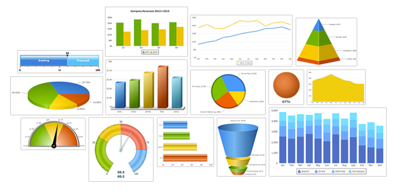
..and that leads us to reporting...


There are numerous data visualization services available today, and one should find the service that provides the information you need, in the way you need to see it.

This can usually be done with GA, Google Charts, and Excel to great satisfaction. But if you are looking for something more thrilling, Fusion Charts with hundreds of visualization templates, or services like Infogram to turn your data into an infographics style rendering.

This is a powerful way to communicate complex data to a busy CEO who is more focused on a power
lunch.

All in good fun,

Tony Sternad
HabaneroMarketing@gmail.com
510-545-2054

Monday, January 2, 2017

Promoting Your Website in 2017 - Outbound Marketing

We covered inbound marketing, SEO, Site design and the Best Practices for Optimizing your Website for 2017 in the last post..

This piece covers the major concepts to consider when designing a complementary inbound marketing service.

So, now you built and tested a beautifully Optimized Website for 2017. Now it the time to build a system of promotion.

'My site is sweet!.. I just wish people would use it..'
A beautifully designed website that is not promoted, is like owning a Ferrari that never leaves your garage.

It is time to drive this brand new Ferrari out and onto the mean streets of doing business.


In this analogy, the following applies:
  • Ferrari = Your website
  • Pain Job = How your website is presented in promotion
  • Sales Floor = How and Where you create demand and visibility for your brand, disseminate links to your site, and convert website traffic into sales
  • Gasoline = Text, Image and Video content
  • Driver = Emotive content generation, link building, client interaction and social networking
  • Insurance = Reputation management
  • Maintenance = Fine tuning with Analytics
To develop the best promotional plan, one should see your website as a product to market, like a Ferrari, rather than the service or product being promoted by the website. That said, your branding should carry through every step, so you will always be in promotion of your brand.

The field of product marketing has particular techniques that are highly useful in marketing a website. Product design and packaging is very important in a successful product; as is user experience and branding for a website. We should also consider the 'packaging', or the importance of the specific content that carries your brand message and or website link.

Ok, enough theory... I think you get the idea.. Now to the specifics:

Covering SEO best practices for 2017 in the last post, the following is a list of the most general steps one should take in outbound promotion of a website. Local optimization, or localization, is its own animal. For now, we will set the specifics of localization aside for a future post. 

We also know, with the right budget one can get a lot of buzz for your site with a good super bowl ad.. but for the rest of us?


The following is a short list of Best Website Promotional Practices for 2017 and applies to both local and national businesses:

  • Register with Google Webmaster Tools
  • Submit Sitemaps to Google
  • Install and verify Google Analytics
  • Register with Bing Webmaster Tools
  • Register and confirm your URL with major Social Media platforms
  • Create Google Business profile with specific company info to match the info on your site
  • Include this exact brand, links and company info to all social media, public profiles and listings
  • Use both long and short tail keywords as anchor text for website hyperlinks
  • Generate inbound links from unowned, topically relevant, high-value websites
  • Generate links from unowned content (press piece, shared image, unowned blog posts, etc.)
  • Create highly emotive content that elicits the action you desire - share, like, comment, etc. 
  • Optimize images and video with metadata: branding, contact information and website links
  • Make sure all branding, contact info and links remain viable through sharing and reposting
  • Include links to all owned web properties on all owned web properties 
  • Continually post content to Social Media, on your site, and on an off-site blog
  • Include branding and contact information on all printed collateral material with QR scan code
  • Include branding and links in all email correspondence. 
  • Include branding and links in a regular email marketing campaign
  • Generate a branded newsletter program and integrate it with your email marketing system
  • Include branding and links in all advertisements on and off-line
  • Include branding and contact information in all public presentations
  • Include links to website and social media within off-site blog posts
  • Install 'followed' links to your off-site blog posts from your website
  • Generate positive customer reviews, promote and repurpose them
  • Participate in topical forums and leave your calling card
  • Leave contributory comments on popular Youtube and Vimeo industry videos
  • Post to Google + communities and include links  
  • Work # threads on Linkedin, facebook, twitter to create social mentions of your brand.
  • Promote linked and branded posts within a specific social network, and cross social platforms
  • Use SlideShare, Prezi or other shared platforms to post branded and linked content
  • Use retargeting to target those who visited your site in the past, deliver branding and links
  • Install appropriate schema markup for shared links to control delivery of brand message
  • Develop a display ad barter network with complimentary businesses
  • Make sure all content that is shared on the web is shareable itself
  • Create on and off-line promotions that encourage social sharing of your content
  • Create Social Media events that produce message reminders, creating brand mentions


There we go, your Farrari is tricked out, fastest ride on the track...

There are endlessly creative methods of promoting your site. As usual, you only have to do more than your competition in order to rank number one for your desired keywords.

In any case, the steps outlined in this post, you should be on the right track to creating a powerful online brand that should land you in a solid SERP position, even when competing with much larger budgets.

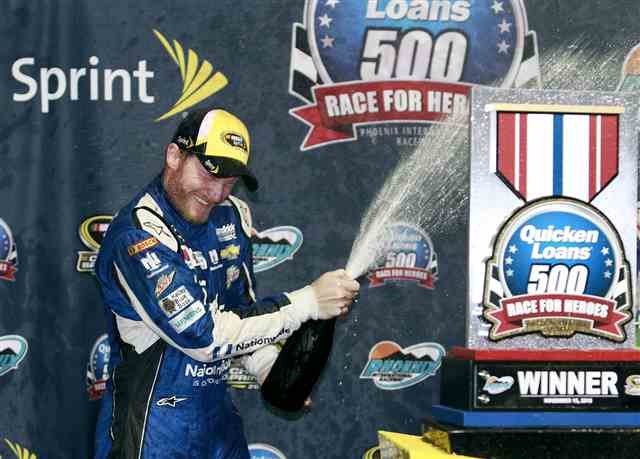
All in good fun... not only do you have a Ferrari of a site, you are now the Dale Earnhardt Jr. of Internet Marketing.


Stay tuned for a series of posts about Analytics: how to measure the success of your marketing program, learn what is working and what is not, and how to adjust your program for the highest return on your marketing spend.

Tony Sternad
HabaneroMarketing@gmail.com
510-545-2054


Saturday, November 26, 2016

Website Optimization - SEO in 2017


When it comes to Optimizing one's website, there is optimized design, optimized content and post-production promotion.

Promotion, or the act of marketing your website, will be discussed in this subsequent post - How to Promote Your Website in 2017

In this post, we will focus on the two slightly conflictory goals in website design and optimized website content creation.

Simply, our website needs to please both human visitors and search engines, and we have two 'target audiences' for our marketing efforts. Striking the right balance with the focus of your onsite content is not easy.

As we look forward to 2017, the trend is clearly that these two needs will eventually become one. The search engines are getting better at understanding your content, and are increasingly giving higher ranking for websites that provide the best user experience.  

It is still measured in terms a robot would understand, like page depth, time on site, load time, bounce rate, etc. But those factors are being more heavily weighed by Google moving forward.


Lets break this down a bit..

The strategies you use to please a search engine are often compatible with strategies to please humans - great UX (user experience), great SEO. But this is only half the story to ranking well. 

A good way to address this challenge is to identify where the conflicts are, where the strategies do not align. 

Go about pleasing the human visitor with design and content. Then, move your attention to solving each of these conflicts you have identified. 

For example, It is always a good idea to network with your potential clients, so social media links should be prominently placed at the top of the website. Search engines happen to love social indicators, so we are all good, get it done.

On the other hand, people tend to hate language that is even remotely stuffed with repetitive keywords, so getting the right terms into the front-end content of your site is not easy. 

Optimizing the front-end verbiage with keywords for search engines while keeping the connection to the audience, maintaining the chosen 'tone' of your writing, is not easy. 

So, identify this specific challenge, and approach one page at a time with a compromise. 

In the back-end of the site, we have more flexibility to directly please the search engines, as much of the back-end metadata is invisible to the human visitor. However, it is crucial for the search engines to understand what your site is about in order to reward you with higher position in search results. 

The back-end data that is visible to the user, the url or schema markup for example, needs to be handled like front-end content.

Here is a short list of some of the most important SERP ranking factors for web design in 2017.

General Search Engine Optimization:
  • Have a fast, dedicated server
  • Fast load times, under three seconds for all pages
  • Low bounce rate, with a goal of under 10%
  • Page depth of three pages or more
  • Time on site over five minutes per visit
  • No Flash, frames, too much java, or other designs incompatible with search engine behavior.
  • Have verified sitemaps for both pages and images
  • Have google analytics installed and register with WMT (web master tools)
  • Have a verified robot.txt file
  • Have no broken links or redirection issues
  • Have links to social media, owned properties (ie off site blog) and content distribution network
  • Have mostly original content, no plagiarism 
  • Don't have too much duplicate content
  • Don't have toxic links to your site
  • Don't over do your keyword optimization.
  • Include enough front end text to please the search engines.
  • Include exact google business profile info on the front-end, as well as in the back-end metadata
  • Be optimized for any screen size, mobile, tablet, large desktops, etc. 
  • On mobile, have simple navigation and fast load times under two seconds
  • Have correctly formatted Schema markup (twitter cards, structured data, knowledge graphs, etc.)
  • Register your URL five years into the future
Front-end keyword optimization for search engines, in order of impact on search result position (Depending on the complexity of your site, you will probably want to optimize each page for only a small set of terms.):

Keywords should be included in..
  • URL
  • H1 to H3 headings
  • First few words of the first sentence of the first paragraph
  • Internal links with keyword rich hyperlinks in first paragraph
  • Internal links with keyword rich hyperlinks in body of text
  • First sentence of first paragraph
  • First sentence of any paragraph
  • Bolded text in first paragraph
  • Repetition to as close as possible to 5% saturation for most important singular word
  • Repetition of two-word keywords
  • Inclusion of long tail keywords
  • Bolded text throughout
  • Image captions
  • External links with keyword rich hyperlinks to topically accurate owned properties
  • Embedded in Schema Markup 
Back-end keyword optimization for search engines: Keywords should be included in.. 
  • Title tag
  • Meta decryption
  • Keywords as H1 - H3 headings
  • Image metadata
There are seemingly endless ways to optimize your site, but at some point, you are chasing your long tail.. You should see a majority of your improvement with the adjustments above. You can, and should measure how well this all is working for you, and continually adjust to get the best impact for your optimizing efforts.

Next up, we will discuss how to go about promoting this beautiful site of yours, once you have it generally optimized.

Tony Sternad
HabaneroMarketing@gmail.com
510-545-2054